ROOTS that run
DEEP IN STONINGTON

GENERATIONS AT STONE ACRES
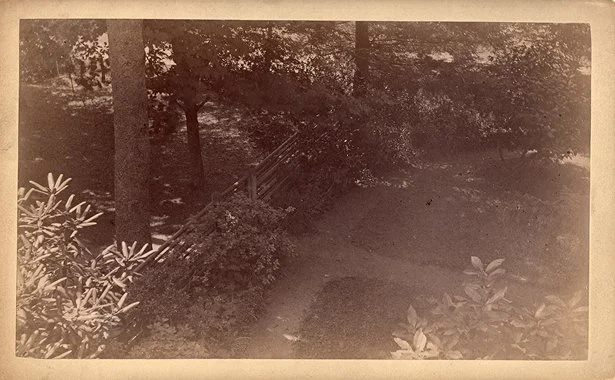
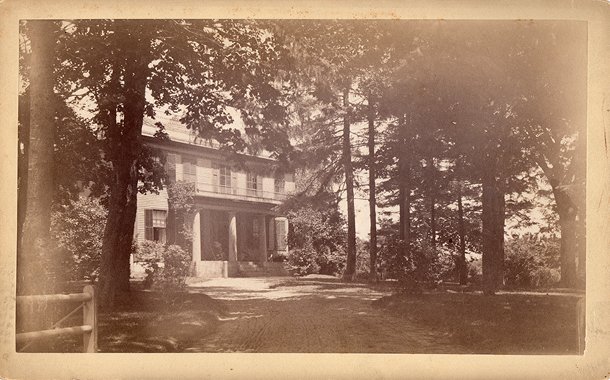
Stone Acres Farm has been part of Stonington’s landscape since 1765. What began as a family homestead has grown into a place where agriculture, history, and community intersect. The farm’s historic manor, boxwood gardens, and century-old greenhouses tell the story of generations who have lived, worked, and celebrated here. Today, those traditions continue—woven into every harvest, event, and gathering.
The FARM
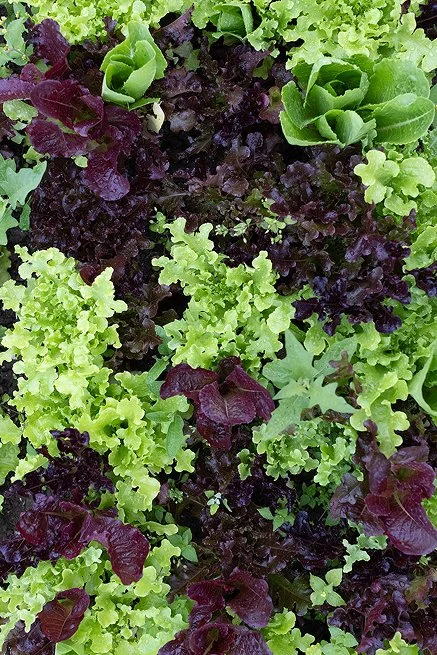
More than a scenic backdrop, Stone Acres is a 65-acre working farm. Our fields produce a wide variety of seasonal vegetables, herbs, and flowers. The farmstand offers the freshest of these harvests alongside pantry staples and partner goods, making it a hub where the community comes together around food. None of this would be possible without our dedicated farm team, who tend the land with care and expertise, season after season.
SUSTAINABILITY IN PRACTICE
More than a scenic backdrop, Stone Acres is a 65-acre working farm. Our fields produce a wide variety of seasonal vegetables, herbs, and flowers. The farmstand offers the freshest of these harvests alongside pantry staples and partner goods, making it a hub where the community comes together around food. None of this would be possible without our dedicated farm team, who tend the land with care and expertise, season after season.
NOURISHING COMMUNITY
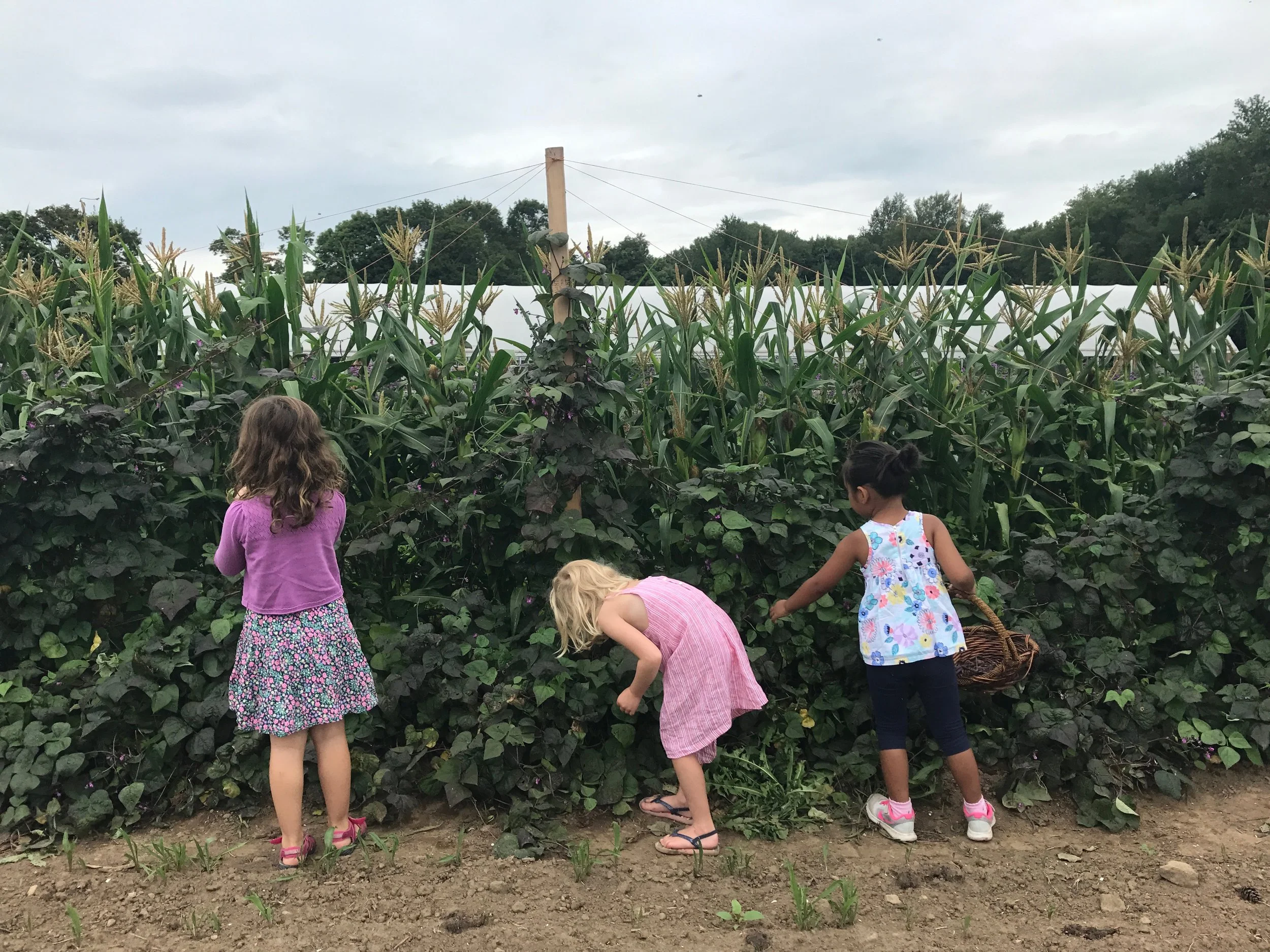
Farming is more than growing food—it’s a way of bringing people together. The fields, gardens, and greenhouses are tended not only to nourish the soil, but also to nourish the community that gathers here. Each harvest connects neighbors to the land, whether through the farmstand, shared meals, or educational programs. By preserving these traditions and sharing them openly, the farm remains both a working landscape and a place where relationships, stories, and roots continue to grow.
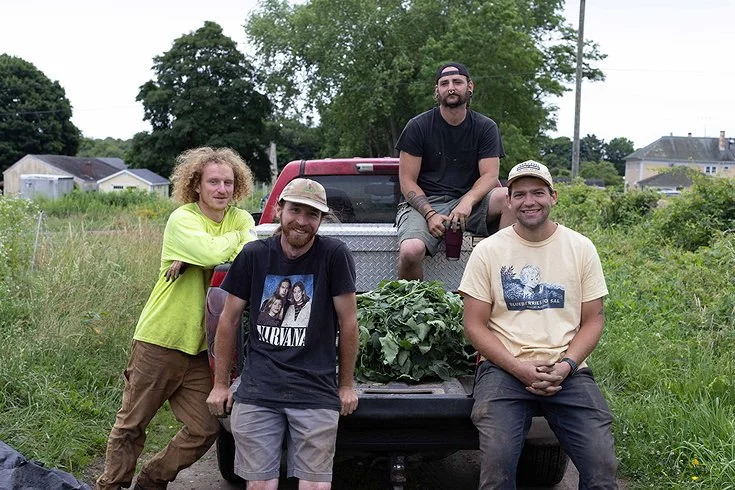
HANDS THAT SHAPE THE HARVEST
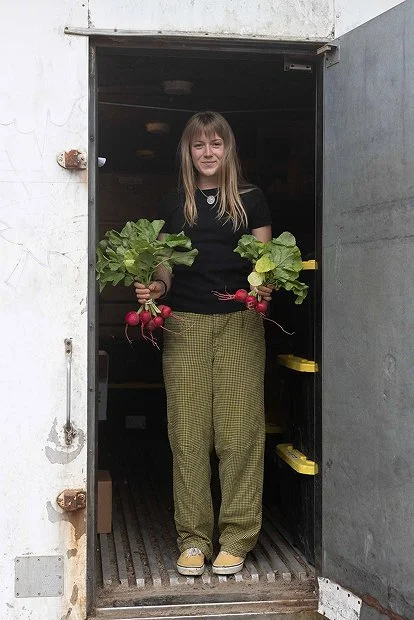
Our farmers bring experience, dedication, and a shared commitment to caring for the land. From managing crops and tending livestock to overseeing daily operations, they ensure that Stone Acres remains both a productive farm and a welcoming community space. Their work combines traditional practices with modern approaches to sustainability, keeping the farm resilient season after season.
TAKE A PIECE OF THE FARM HOME
CENTURIES in the
MAKING
HISTORY
Founded in 1765, Stone Acres has been a farm, a refuge, and a gathering place for over 250 years. From supplying goods by steamship and rail to sheltering neighbors during the Battle of Stonington and the Hurricane of 1938, its history is woven into the story of the town. This timeline shares the moments that shaped the farm into what it is today.
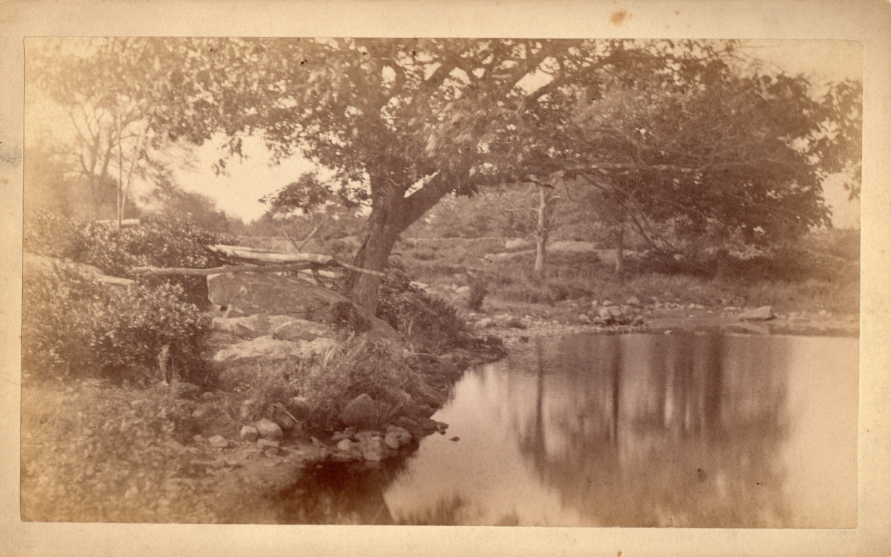
Local physician Dr. Charles Phelps Sr. acquires the property, establishes the farm and builds the original manor house, laying the groundwork for a working farm that will span more than 250 years.
1765
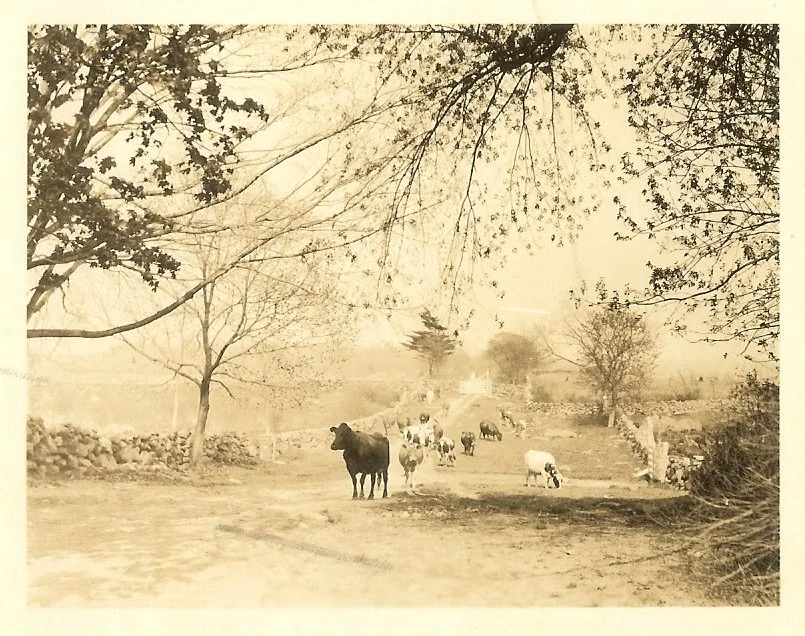
Stone Acres serves as a provision farm supplying produce to local landowners and a growing community tied to Stonington’s thriving steamship and railroad trade.
Early 1800’s
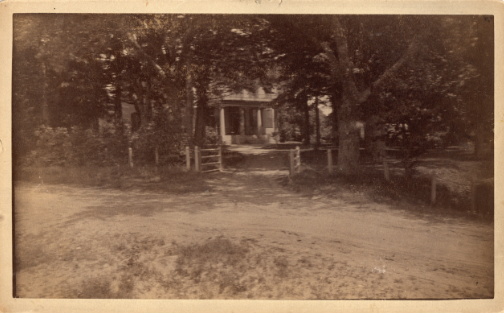
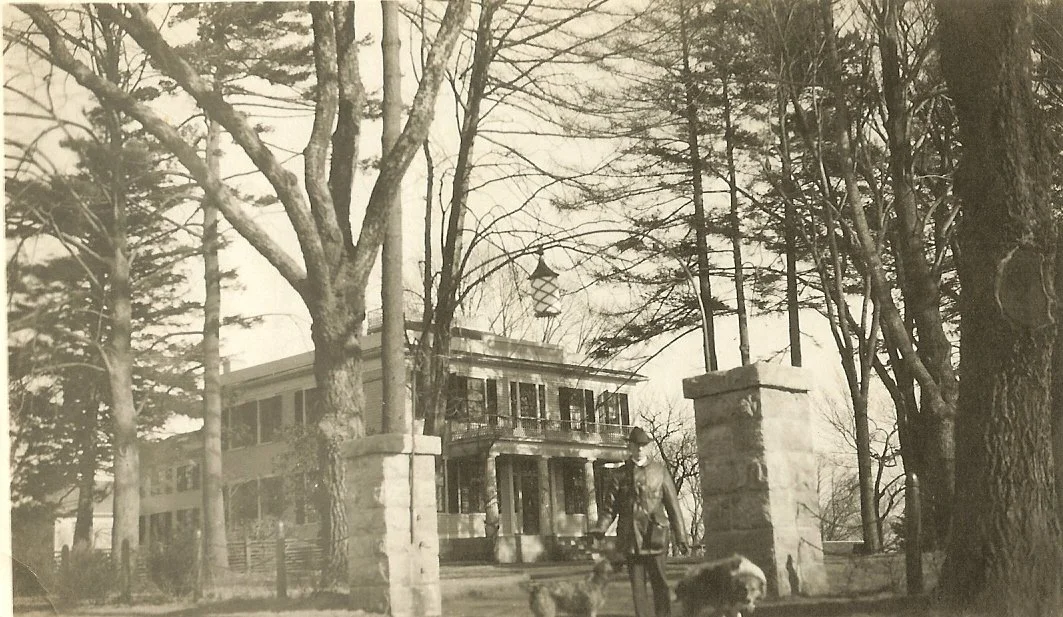
During the Battle of Stonington (War of 1812), the house becomes a temporary hospital and refuge as townspeople shelter from British bombardment.
1814
Charles H. Phelps Jr., a sea captain and merchant, expands the house with its stately front section, shaping the home’s enduring profile.
1830
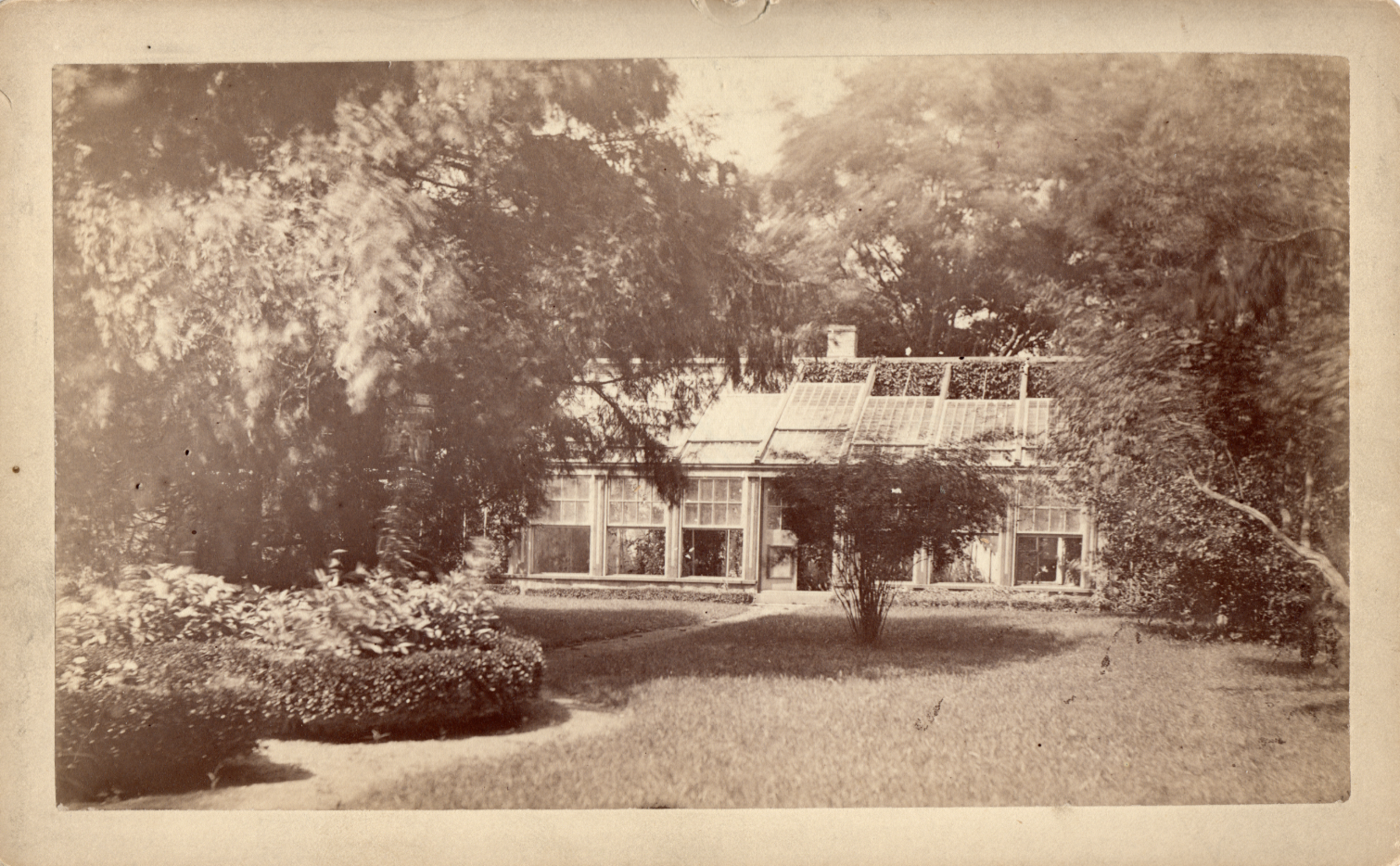
Under the stewardship of the Edwards family, formal gardens take shape: a gazebo, fish pond, rose arbors, and the quarter-mile of boxwood, some of which is still standing in the garden today.
Late 1800’s
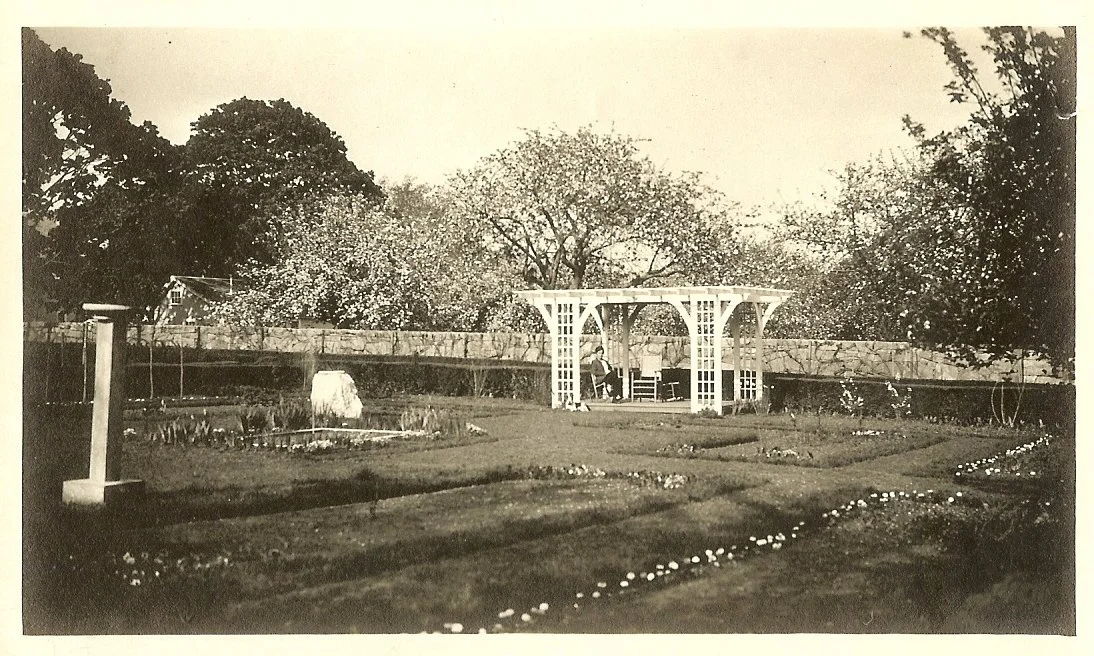
A Lord & Burnham seed-propagation greenhouse is installed.; the larger “Grapery” follows, enabling year-round citrus and grape production for the Phelps and Edwards families.
1835
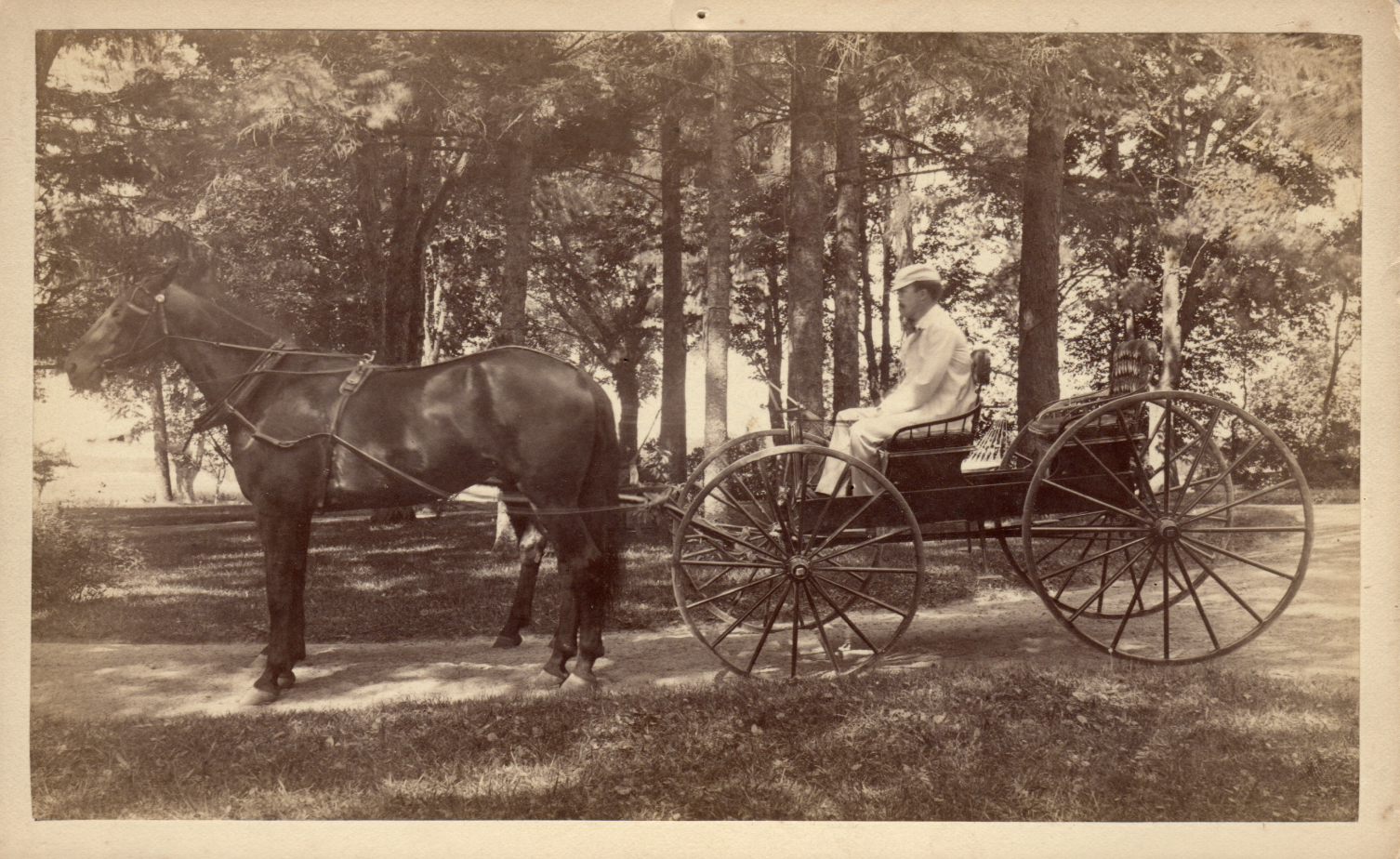
A carriage barn is constructed on the property, housing the farm’s horses, equipment, and implements. Parts of the farmstead are later listed on the Connecticut State Register of Historic Places.
Late 1800’s
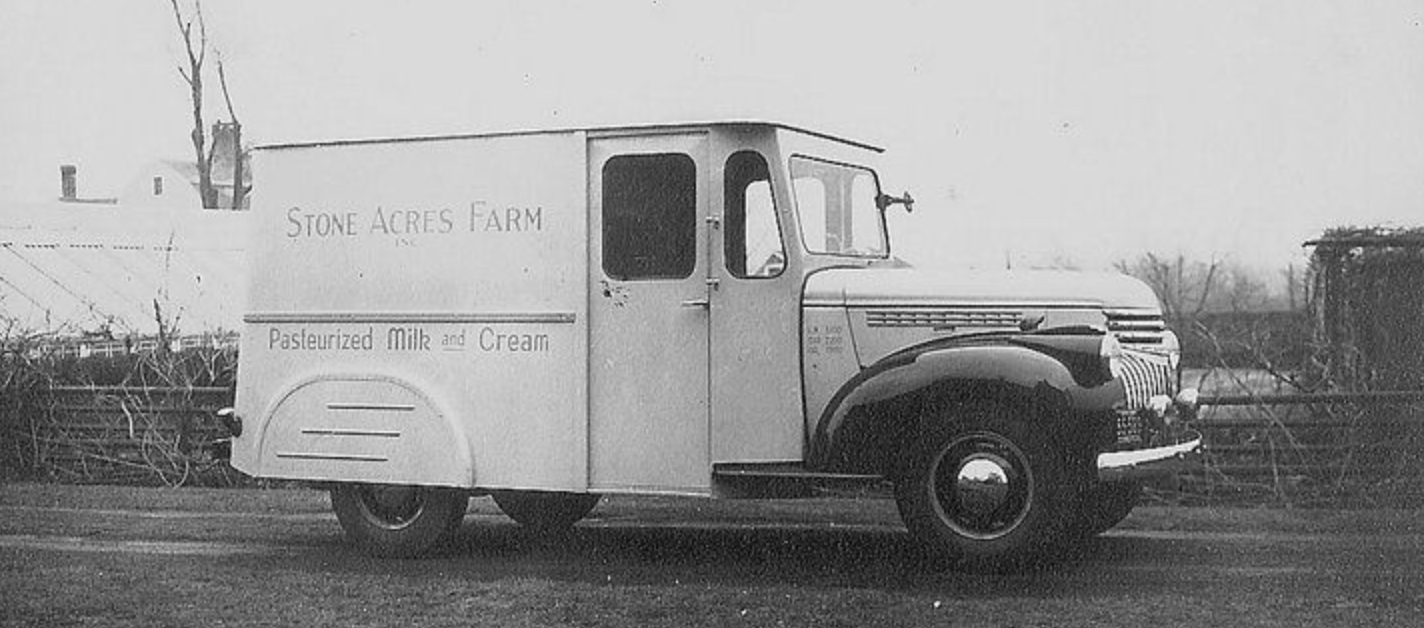
Dr. Frederic Paffard modernizes dairy operations by introducing pasteurization; milk is bottled on site and delivered around Stonington—especially vital through the Depression and WWII.
1930’s

Sept. 1938
When the Great New England Hurricane strands rail passengers, dozens find shelter for days inside the manor house.
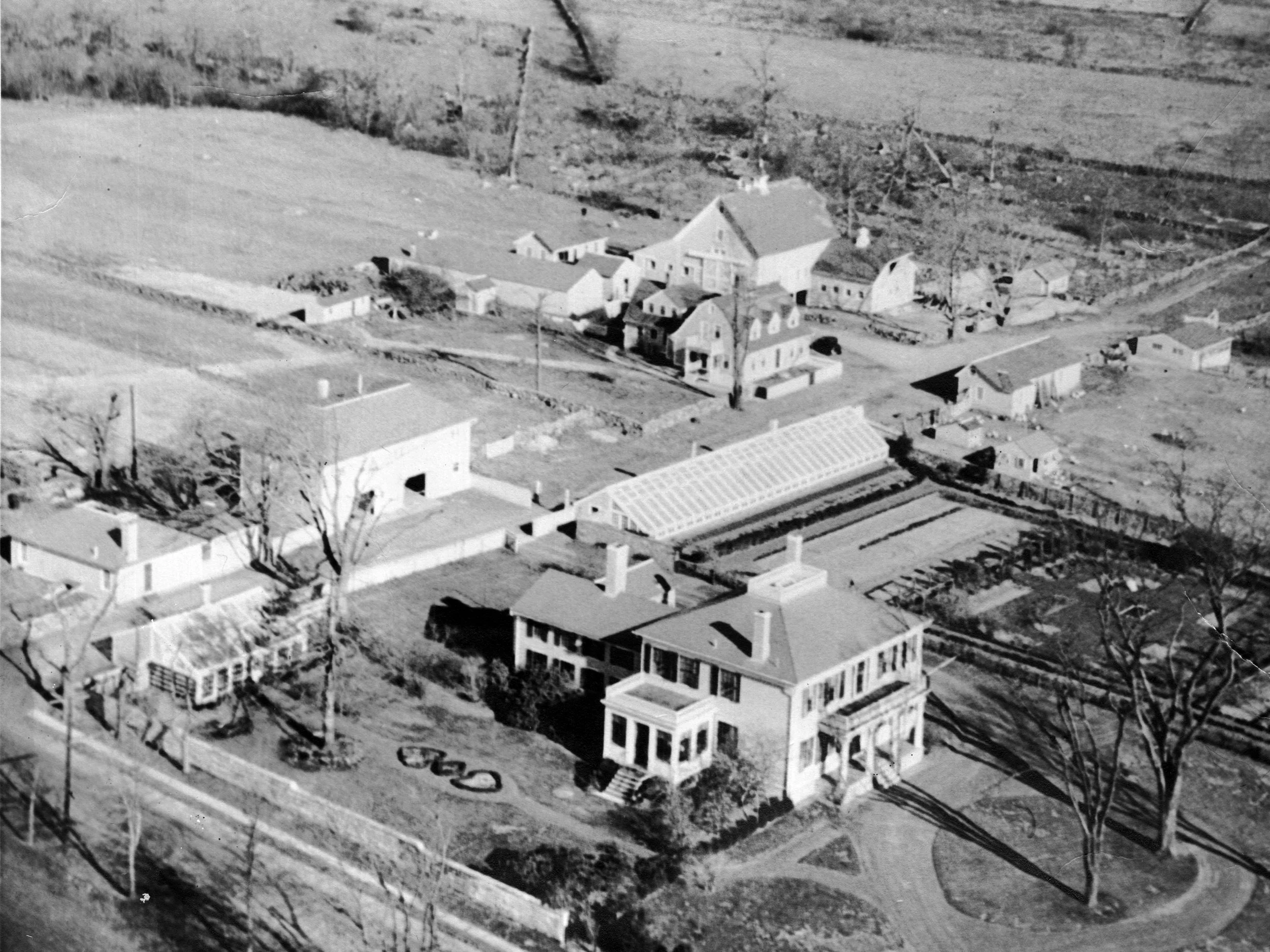
Lightning strikes and destroys the old dairy barn east of the farmhouse; much of the complex is documented in period photographs.
1946
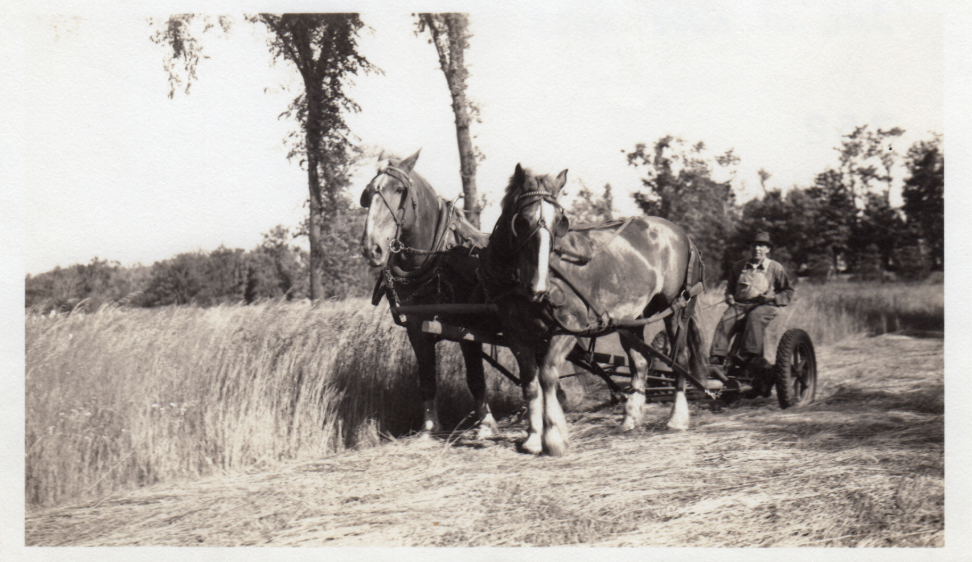
The farm continues as a community anchor—cultivating vegetables, orchards, and eggs—while ornamental gardens and historic structures remain central to the estate’s character.
Before & After WWII
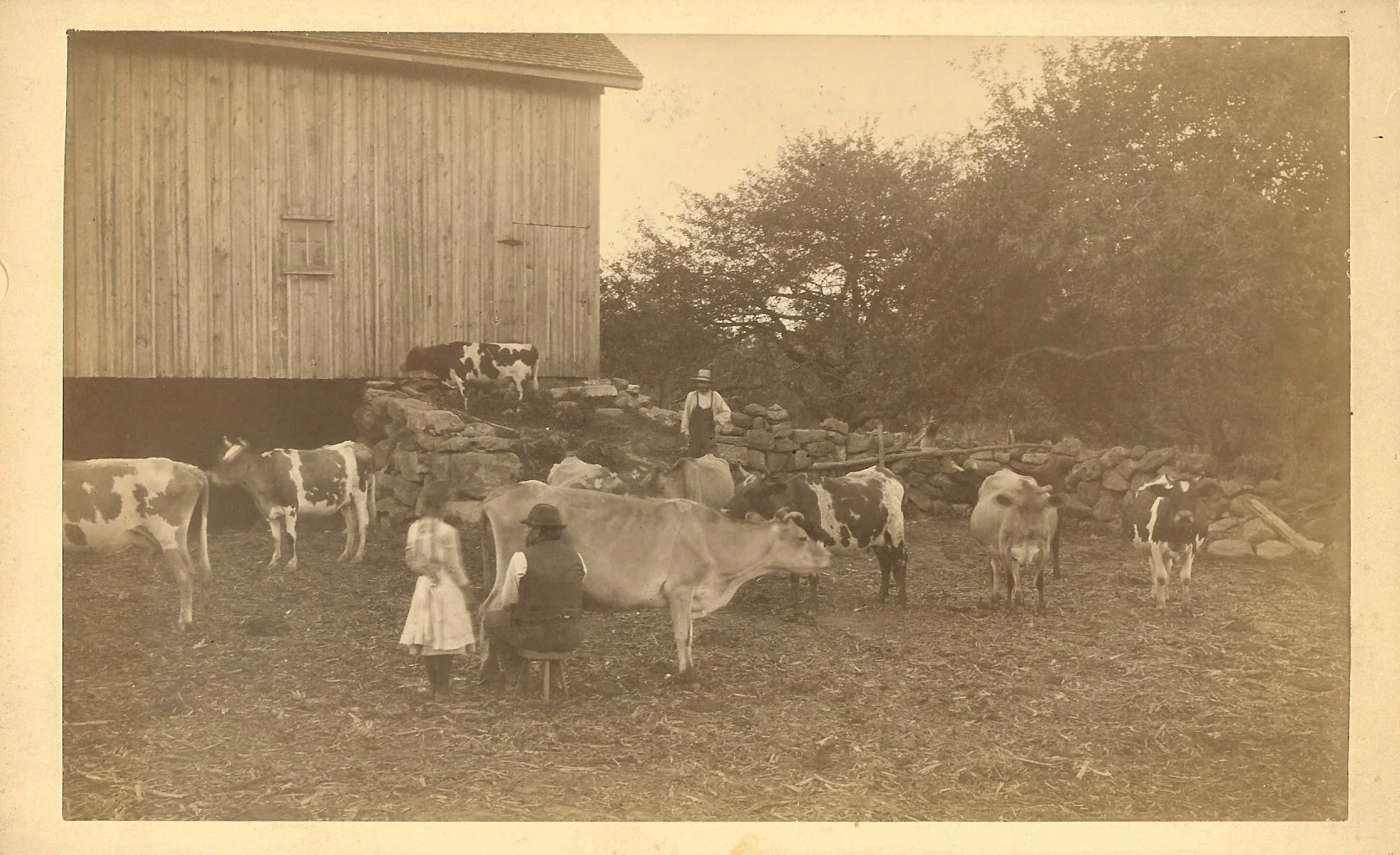
Through marriage, the farm passes within the same extended family—from Phelps to Edwards to Paffard—preserving agricultural operations from the 18th century to today.
Continuous Family Stewardship
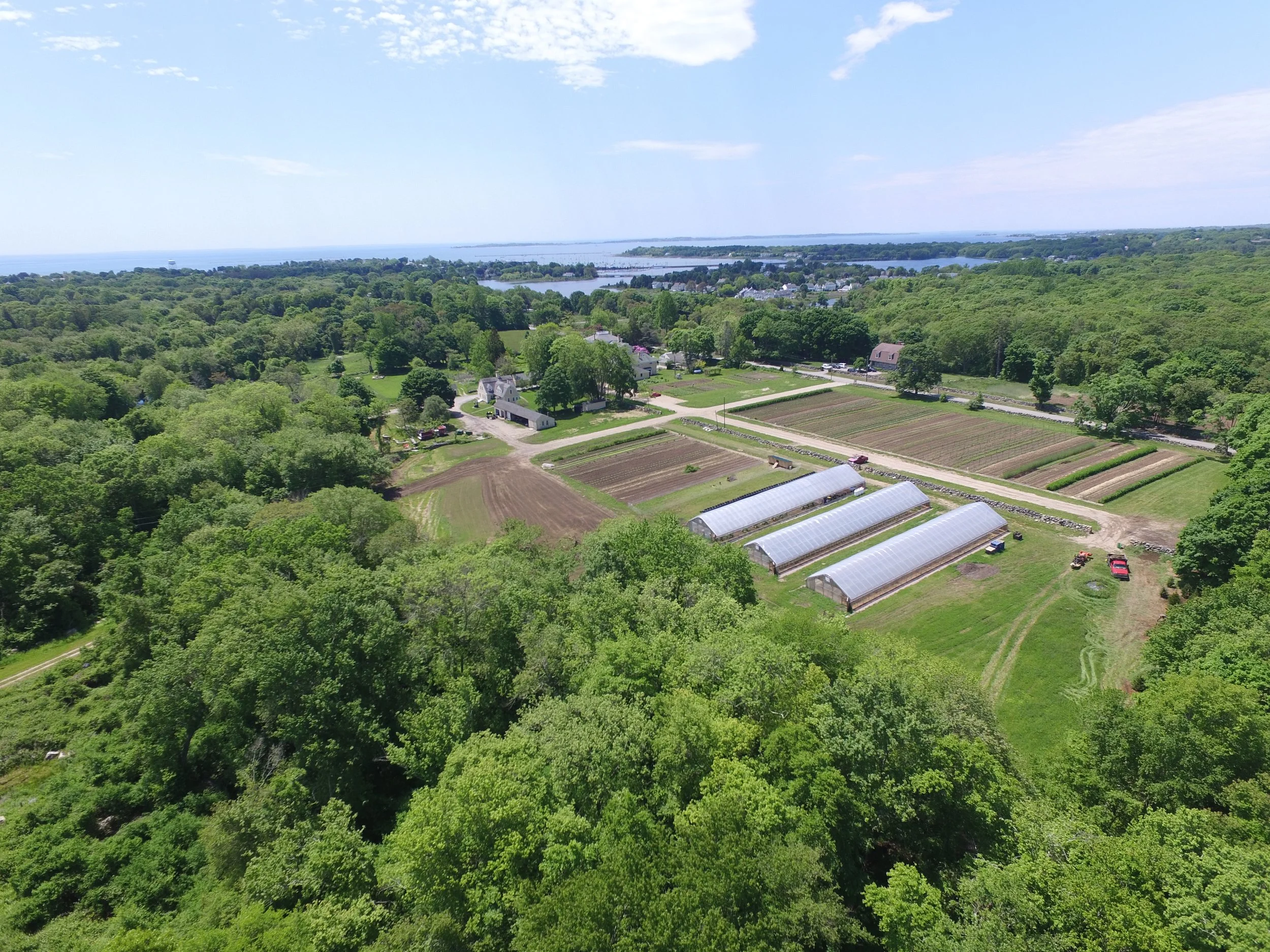
A group of local families committed to preserving the historic farm property, celebrating open space and promoting community, purchases the farm to save it from development. The town of Stonington creates the Agricultural Heritage District “floating zone,” and the town unanimously approves Stone Acres’ master plan.
2015-2017
2017
Yellow Farmhouse Education Center was founded on the property to expand culinary and farm-based education for schools and the public.

Stone Acres operates as a 65-acre working farm and public-facing campus—fields, cut-flower program, heritage gardens, greenhouses, and events—integrating education and hospitality while preserving open space and historic structures.
2018-Present
Stone Acres continues its mission as a gathering space for the community to celebrate the connection of food, farming and education